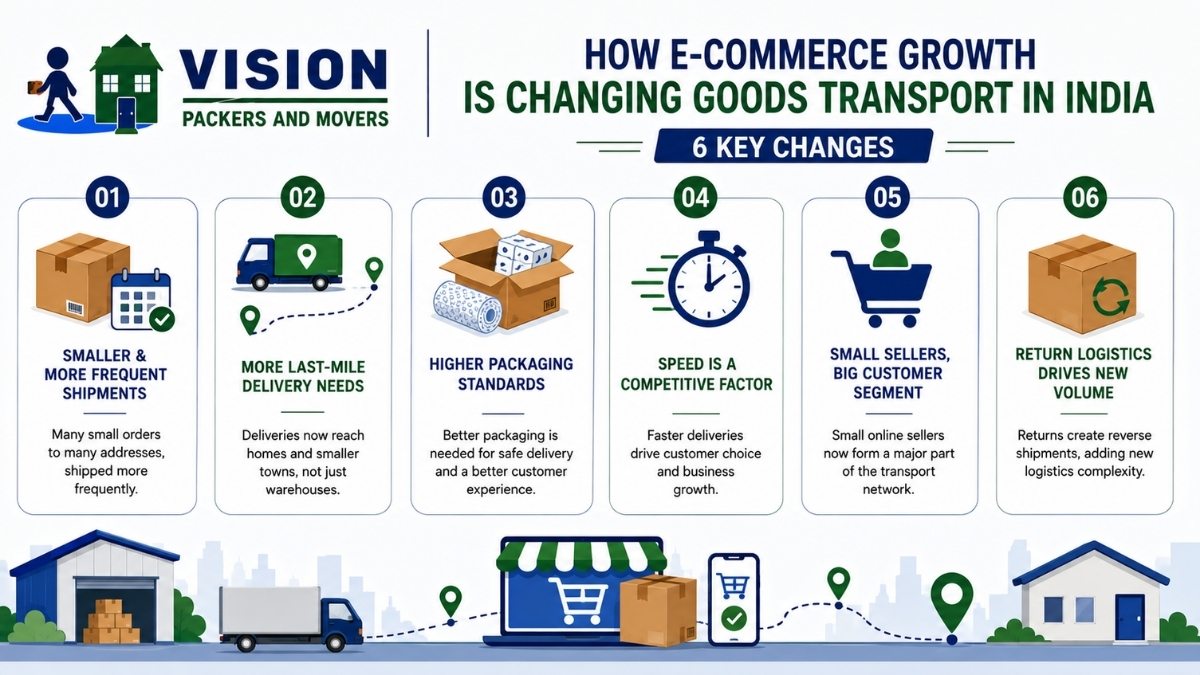
The growth of e-commerce in India has not only changed how people shop — it has changed how goods move across the country. The ripple effects on goods transport are visible in the size of shipments, the frequency of pickups, and the expectations customers bring to every delivery. Understanding these changes is useful for anyone running a small online business or using goods transport as part of their work.
Shipments Have Become Smaller and More Frequent
Traditional goods transport was built around large, infrequent consignments — a factory shipping a full truckload to a distributor once a week. E-commerce has introduced the pattern of many small orders going to many different addresses, often daily. Goods transport companies serving small online sellers now handle shipments measured in kilograms rather than tonnes, and they do so far more frequently than before.
This shift requires transport networks to build more flexible pickup and delivery systems. A vehicle that runs a fixed weekly route to a single distributor is not suited to collecting ten small parcels from ten different addresses across a city each morning.
More Sellers Need Last-Mile Delivery, Not Just Intercity Hauls
Traditional goods transport ended at a depot or a business address. The rise of direct-to-consumer selling has pushed the endpoint of delivery into residential areas and smaller towns. Transport companies have had to adapt their networks to reach addresses that traditional freight routes never covered.
This last-mile challenge is one of the most significant operational changes the goods transport industry has faced. Reaching a residential colony in a Tier 3 city requires a very different approach from delivering a pallet to a warehouse on the outskirts of a major city.
Packaging Standards Have Risen
When large businesses shipped goods to distributors, the receiving party had a warehouse team to handle imperfect packaging. When a small online seller ships directly to an individual customer, the package condition at delivery is a direct part of the customer experience. This has raised the bar for how goods are packaged before dispatch, which in turn has increased demand for better packaging guidance and materials from transport companies.
Transport companies that advise small sellers on packaging and provide appropriate materials add value that goes beyond simply moving goods from one point to another.
Speed Has Become a Competitive Factor
Before e-commerce, goods transport timelines were measured in days and accepted as fixed. Online customers now compare delivery speeds and leave reviews based on how quickly their order arrived. Small sellers using goods transport face pressure to deliver faster, which has pushed transport companies to develop express options on key intercity routes.
For sellers competing on delivery time, choosing a transport company with express options on the routes they use most often has become a meaningful business decision rather than a secondary consideration.
Small Sellers Have Become a Significant Customer Segment
Individuals selling handmade goods, clothing, food products, or equipment through online platforms now form a meaningful share of the goods transport market. These senders typically have smaller and more variable volumes than traditional commercial clients. Serving them well requires flexibility in pricing and pickup scheduling that traditional freight contracts did not require.
Transport companies that build systems for small online sellers — flexible pickup, per-shipment pricing, digital receipts, and tracking — are addressing a customer segment that has grown significantly over the past several years.
Return Logistics Have Created New Volume
E-commerce return rates are significant. When a buyer returns a product, it needs to travel back from the buyer to the seller. This reverse movement has created a logistics need that did not exist at scale before online selling became widespread. Goods transport companies now handle outbound and return shipments as separate but connected services for the same customers.
Managing returns adds complexity to the transport operation. The return shipment often needs to be inspected at collection, labelled with the correct return details, and tracked separately from outbound orders.
The changes driven by e-commerce growth are not temporary adjustments — they represent a structural shift in how goods move across India. Transport companies that understand the needs of small online sellers and individual buyers are better positioned for the next phase of this evolution than those focused only on traditional bulk freight.
