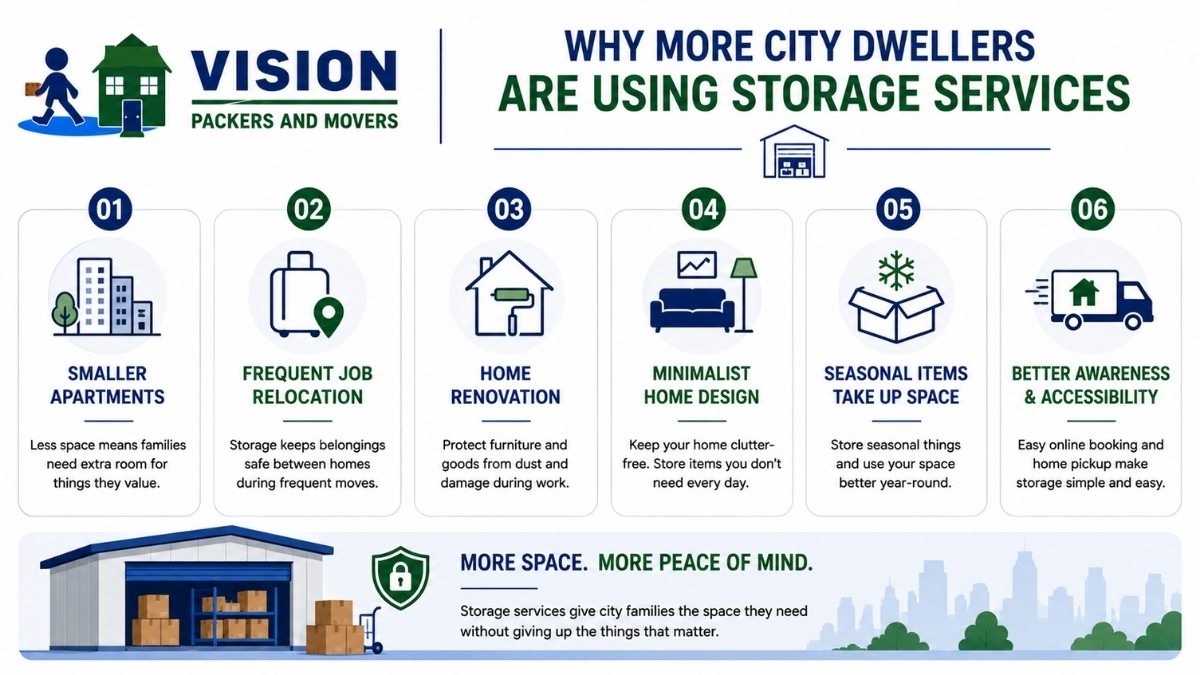
Household storage services were once associated mainly with businesses or wealthy households with surplus goods. In recent years, they have become a practical choice for a much wider range of city residents. Several shifts in urban life have made storage both more useful and more necessary for ordinary households.
Apartments Are Getting Smaller
In major Indian cities, new residential apartments have steadily trended toward smaller floor areas as land prices rise and builders optimise space. A family that once had three rooms to spread across now often lives in a two-bedroom apartment where built-in storage is limited. Items that do not fit the available space need to go somewhere, and storage facilities offer a clean solution without requiring a household to discard things they still value and use.
The reduction in apartment size has also made built-in storage features — large wardrobes, pantry areas, and utility rooms — less common in newer builds. Households are managing more belongings in less dedicated storage space than before.
Frequent Relocation for Work Has Become Normal
City professionals, particularly in technology, finance, and services, move every one to three years as jobs change. Each move involves decisions about what to keep, what to store, and what to discard. Storage provides a holding space between two homes, especially when the new place is smaller than the old one or not yet ready for all belongings.
For someone relocating regularly, a storage unit functions as a stable base for items that do not move with every relocation. The contents stay in one place while the household address changes around them.
Renovation Is More Common in Urban Homes
With rising property values, many city homeowners choose to renovate rather than relocate. During renovation, furniture and household goods need to be moved out of the affected rooms. Storage facilities provide a clean, secure alternative to piling belongings into unaffected rooms or asking neighbours for space.
A storage unit during a renovation also protects items from dust, paint, and the general damage risk of a construction environment. For households doing significant work on their home, this protection is often more valuable than the cost of the storage itself.
The Rise of Minimalist Home Design
A growing interest in minimal, uncluttered home interiors has made people more conscious of what they keep visible in their homes. Items that are valued but not needed daily — seasonal decor, extra furniture, hobby equipment — are being moved to storage rather than kept in the home where they create visual clutter. The home becomes more comfortable, and the items are still available when needed.
This approach to living treats storage as an extension of the home rather than a destination for things being discarded. The shift in how people think about household space has opened up the storage market to a new category of user.
Seasonal Items Take Up Disproportionate Space
Many households own items they need only a few months each year — winter quilts, festival decorations, sports equipment, gardening tools. In a small apartment, these items can take up a significant share of the available storage space for the months they are not in use. A storage unit handles this seasonal surplus without requiring the household to discard items they will need again.
Moving seasonal items into and out of storage once or twice a year has become a practical and affordable routine for households that have adopted this approach. The cost of a small storage unit for a few months is often comparable to the cost of replacing the stored items each season.
Awareness and Accessibility Have Improved
Household storage services in India have grown in visibility and geographic reach over the past several years. In many cities, providers now offer door pickup and delivery of stored items, removing the need to visit a facility in person. This convenience has made storage a more accessible option for people who might previously have found it too complicated to arrange.
Online booking, clear pricing structures, and home collection services have transformed household storage from a service that required significant research into one that can be arranged in a short online session.
The growth in storage use among city dwellers reflects practical responses to real constraints — smaller homes, more frequent moves, and a changing sense of what a comfortable home should look and feel like. Storage services have adapted to serve these needs, and the result is a market that continues to expand.
