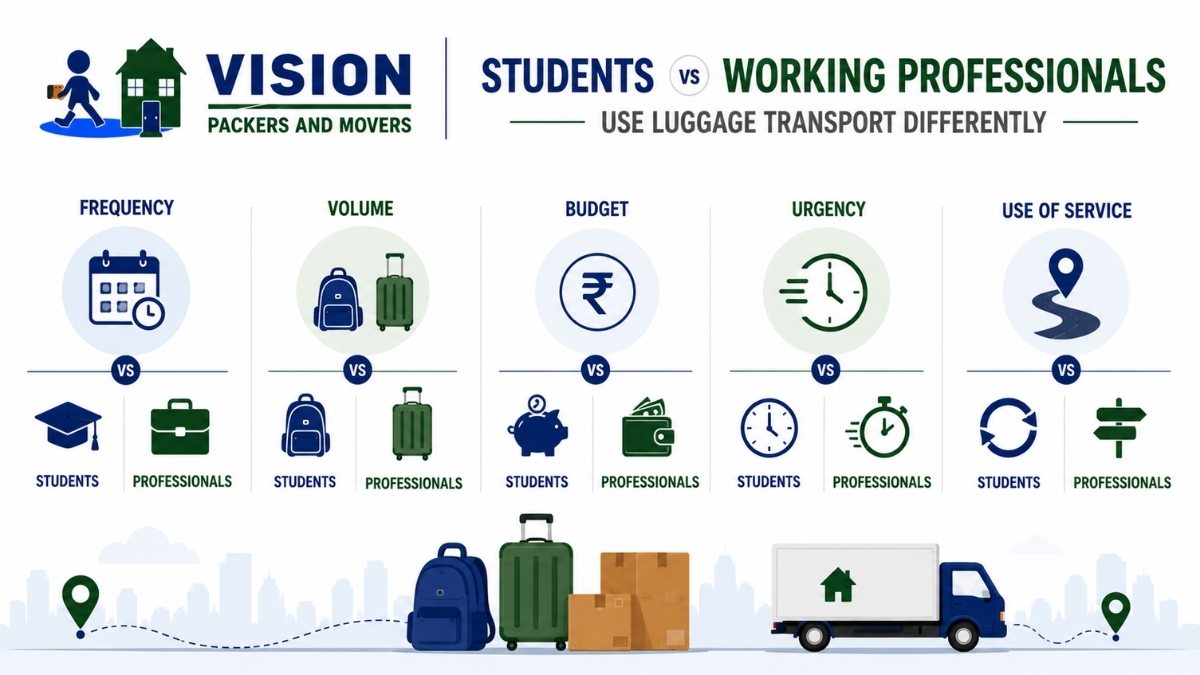
Luggage transport is used by a wide range of people, but the way students and working professionals use it tends to be quite different. The differences show up in what they send, how often they send it, and what they prioritise when choosing a service. Understanding these patterns is useful both for people deciding whether luggage transport suits their needs and for understanding what to look for in a provider.
Frequency of Use
Students typically use luggage transport at predictable, regular intervals — the start and end of each semester, and during long holidays. A student in a hostel might use the service two to four times a year in a consistent, repeating pattern. The timing is driven by the academic calendar, which makes planning ahead straightforward.
Working professionals use luggage transport at less predictable intervals, typically driven by job changes, project relocations, or extended travel assignments. The professional may go a year or more without needing the service, then use it intensively during a relocation. The timing is driven by career events rather than a fixed calendar.
Volume and Type of Items Sent
Students typically send a manageable and consistent set of items — clothes for the season, books and stationery, bedding, a few personal items, and perhaps a small appliance. The load is moderate and repeatable from one semester to the next. Most student shipments fit into two to four standard bags or boxes.
Working professionals relocating for a job tend to send a larger volume that may include work equipment, professional clothing, and a broader range of personal belongings accumulated over years of working life. The professional relocation load is often a one-time, larger shipment rather than a recurring small one. The variety of items is also greater, which adds complexity to packing.
Budget Sensitivity
Students are typically on tighter budgets and are more price-sensitive when choosing a luggage transport service. They are more likely to use depot-to-depot services to save money and plan further ahead to avoid express charges. For many students, finding the most affordable option that still delivers safely is the primary decision factor.
Working professionals on relocation are often less price-sensitive and more urgency-sensitive. They may pay for door-to-door service and faster delivery to reduce the disruption to their working schedule. The time saved by a more convenient, faster service is often worth more to a professional mid-relocation than the cost difference between service tiers.
Urgency of Delivery
Students often plan their luggage transport well ahead of a semester start date and are willing to wait a few extra days for delivery. There is no immediate professional consequence to luggage arriving on the third day rather than the first. This flexibility makes the slower, more affordable transport tiers a sensible choice.
Working professionals starting a new job are often under more time pressure. They need their belongings to arrive within a specific window that aligns with their start date at work. This urgency shapes which service tier they choose and how much lead time they build into the booking process.
Use of the Service for Regular Life vs Transition
For students, luggage transport becomes a routine part of managing life between two places — home and the place they study. It is a recurring logistical tool used in a predictable, seasonal way. Many students develop a preference for a specific company or service after the first good experience and use it consistently throughout their years of study.
For most working professionals, luggage transport is primarily a transition service used during major life changes. Some professionals who travel frequently for extended assignments develop a more regular relationship with luggage transport that is closer to the student pattern. For others, it remains an occasional service used only when circumstances require.
The needs of students and working professionals overlap in many ways — both value reliable pickup, safe delivery, and clear communication. The differences in frequency, volume, and urgency are worth understanding when choosing a service level that fits the specific type of move you are making.
