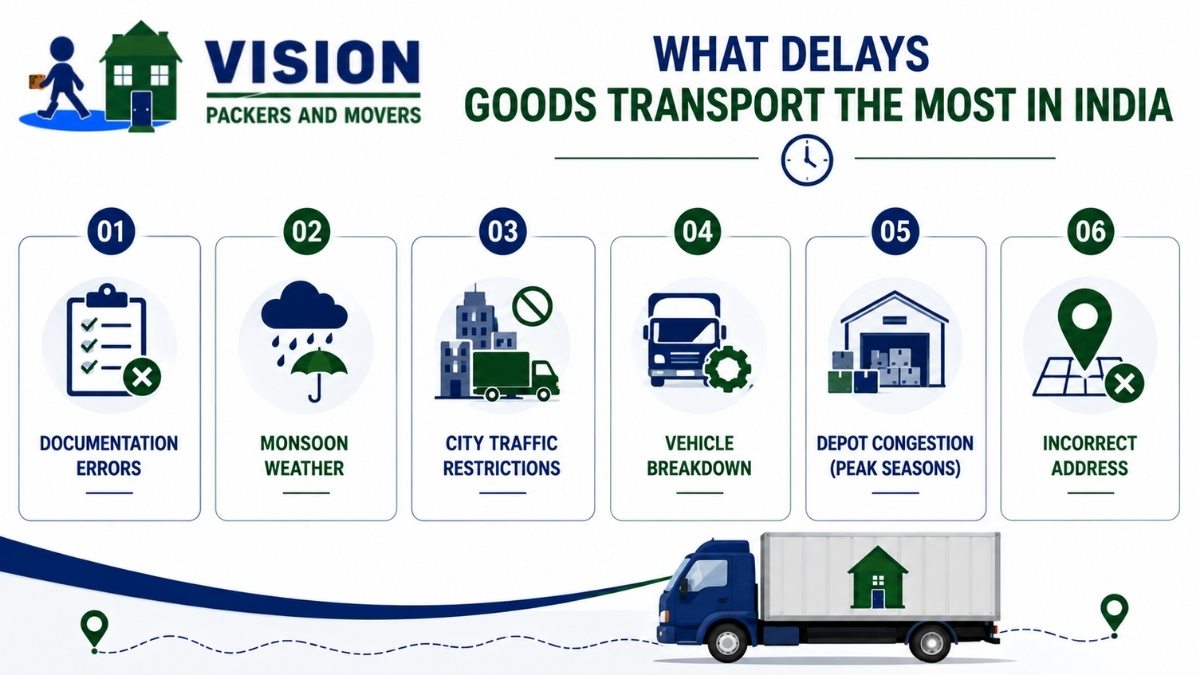
Delays in goods transport are one of the most common complaints from both individual senders and businesses. In most cases, the delays have specific, identifiable causes rather than being random. Understanding what causes delays is the first step to reducing them on your own shipments.
Incomplete or Incorrect Documentation
Documentation errors are one of the most preventable causes of delay. For commercial shipments, a missing e-way bill, an incorrect delivery address, or a mismatch between the invoice and the consignment note can stop a shipment at a checkpoint or depot until the error is corrected. This type of delay can add one to three days to a journey that would otherwise have been straightforward.
Preparing all documents the day before pickup eliminates most of this risk. Cross-checking the delivery address, the weight and value stated on the invoice, and the consignment note details before the vehicle arrives takes fifteen minutes and prevents delays that can last several times longer.
Weather Conditions — Especially Monsoon
Monsoon flooding, landslides on mountain routes, and waterlogged highways are among the most significant causes of delay for goods transport in India during June to September. Routes through hilly states are particularly vulnerable, and delays from these causes can last multiple days when a route is blocked.
Delays from weather are unpredictable in their exact timing but predictable in their season. Booking with extra buffer time during the monsoon months is the most effective response. If a shipment must arrive by a specific date and the delivery window falls in monsoon season, building in at least two extra days gives a realistic chance of meeting the deadline.
Traffic Congestion in and Around Major Cities
Goods vehicles face significant delays in urban areas, particularly around major cities at entry and exit points. Truck entry restrictions during peak hours in cities such as Delhi, Mumbai, and Chennai add hours to transit times. A driver who needs to reach a city centre warehouse may have to wait outside the city during restricted hours before being allowed in.
Shippers who are aware of these restrictions can choose delivery addresses and request delivery timing that minimises this impact. Choosing a depot address near the city periphery rather than a central address can avoid the worst of urban entry delays on time-sensitive shipments.
Vehicle Breakdown
A vehicle breakdown mid-route is one of the least predictable causes of delay. A professional transport company has contingency plans — a replacement vehicle or a partner network — but these arrangements take time. The delay from a breakdown ranges from a few hours to a full day depending on the location and the severity of the issue.
There is limited preventive action for the sender, but choosing a transport company with a well-maintained fleet and a clear breakdown policy reduces the risk. Asking a company how they handle breakdowns before booking gives a useful indication of how seriously they manage this possibility.
Depot Congestion During Peak Seasons
During the months immediately before Diwali, the financial year end, and harvest periods for agricultural goods, transport depots handle a significantly higher volume than usual. Goods that pass through a congested depot can be delayed by several days while the backlog clears. This type of delay is often invisible to the sender until delivery does not arrive on the expected date.
Choosing direct transport rather than depot-routed transport eliminates this risk for time-sensitive goods. For non-urgent shipments, booking with extra delivery buffer time during known peak periods manages the expectation rather than trying to avoid the congestion entirely.
Incorrect or Inaccessible Delivery Address
A delivery that cannot be completed because the receiver is not present, the address is incomplete, or the building is inaccessible to a large vehicle creates a re-delivery attempt that adds a day or more to the total transit time. This is one of the most preventable causes of delay and one of the most consistently repeated ones.
Providing a precise delivery address — including the floor, building name, nearest landmark, and an alternate contact number — prevents most of these situations. Confirming with the receiver that someone will be present during the expected delivery window removes the most common cause of failed first delivery attempts.
How Proper Planning Reduces Delays
The majority of goods transport delays are not caused by uncontrollable factors. Documentation errors, address mistakes, and booking during peak congestion periods are all manageable with preparation. Confirm all documents are ready the day before pickup, provide a complete and accurate delivery address, book with extra time during monsoon and festival seasons, and stay in contact with the transport company so any emerging issue can be addressed before it becomes a significant delay.
Understanding which delays are preventable and which are not gives you a realistic expectation of what the transport process involves. The preventable ones are almost always the result of preparation steps that take less than an hour to complete.
