Bike transport between Indian cities has become noticeably more in demand over the past several years. While the service existed before, the volume of people using it has grown alongside a broader trend of job mobility across the country. The connection between where people work and where their bikes travel is more direct than it might first appear.
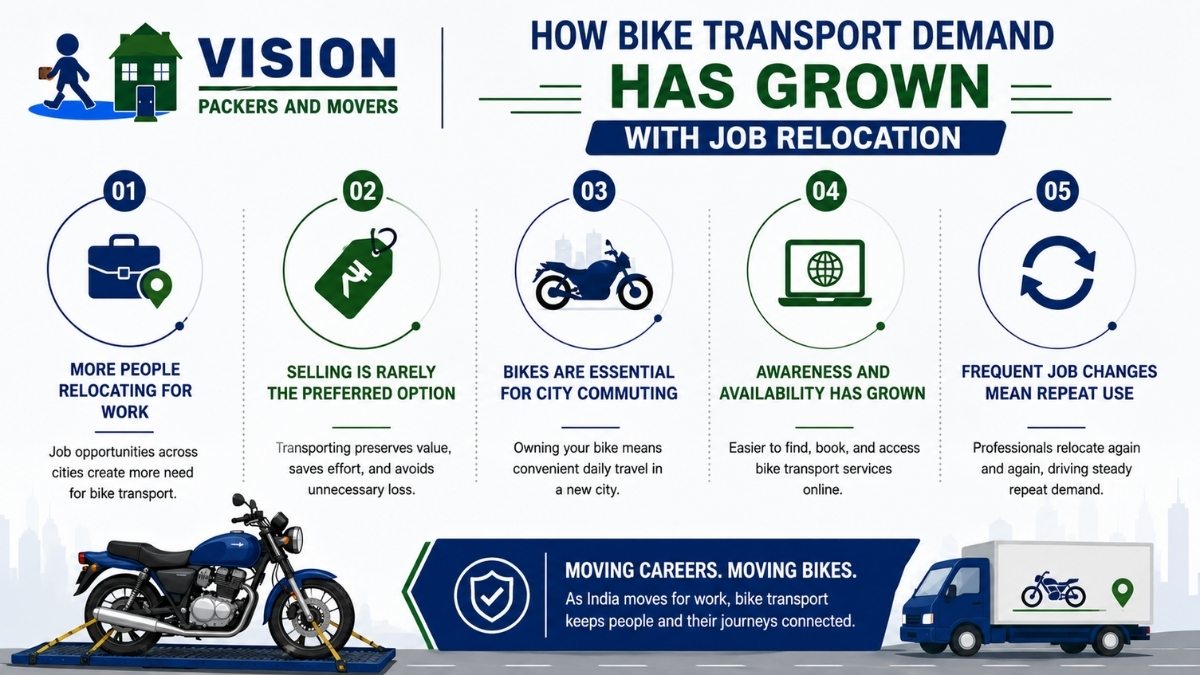
More People Are Relocating for Work Across Cities
The job market in India has become increasingly mobile. Professionals in technology, finance, healthcare, manufacturing, and government all move between cities for better opportunities, promotions, and project assignments. Each relocation that involves a person who owns a bike creates a potential demand for bike transport.
In recent years, this mobility has extended beyond the major metro cities. Professionals moving to and from Tier 2 and Tier 3 cities for new opportunities have expanded the geographic reach of bike transport demand significantly.
Selling a Bike Is Rarely the Preferred Option
When someone relocates for a job, the practical options for a bike are to sell it, ride it to the new city, or transport it. Selling at the origin city often means accepting a significant price drop, especially for newer bikes. Riding long distances — sometimes over a thousand kilometres — is exhausting, involves wear on the bike, and is not practical in all weather conditions.
Transporting the bike has become the default choice for many people because it preserves the value of the bike without the physical demand of a long ride. For a bike that is still under a loan or is relatively new, selling at a loss is rarely the right financial decision.
Two-Wheelers Are the Primary Mode of City Commuting
In most Indian cities, a bike or scooter is the most practical daily commuter vehicle. A professional who relocates to a new city needs local transport from day one. Bringing a familiar, owned bike eliminates the need to buy a new vehicle or depend on shared transport while settling in at a new location.
This practical need drives the decision to transport rather than replace the bike. The cost of bike transport between cities is generally far lower than the cost of buying an equivalent replacement vehicle in the new city.
Awareness and Availability of Bike Transport Services Has Grown
A decade ago, many people did not know that professional bike transport was available or how it worked. Today, the service is easily searchable and bookable online. Companies serving this market have expanded their networks across more cities and routes, and the process has been simplified through online booking and home pickup options.
Greater visibility and availability have removed the friction that once made bike transport seem complicated or inaccessible. A professional planning a relocation today can find and book a bike transport service in the same session as they arrange house shifting.
Frequent Job Changes Mean Repeated Use
Working professionals who relocate once are likely to relocate again. Someone who moves from Delhi to Bengaluru for a job may move to Hyderabad or Mumbai within a few years. Each move creates a repeat use of bike transport services. This repeat customer pattern has contributed to the steady growth of the market alongside the arrival of first-time users.
For transport companies, the repeat nature of this demand creates a relationship-based service dynamic. A customer who used a service once and had a good experience will return for the next relocation rather than searching again from the beginning.
The growth in bike transport demand is, at its core, a reflection of how working life in India has changed. As more people build careers that span multiple cities, the practical need to move personal vehicles alongside them becomes part of the standard relocation plan.
