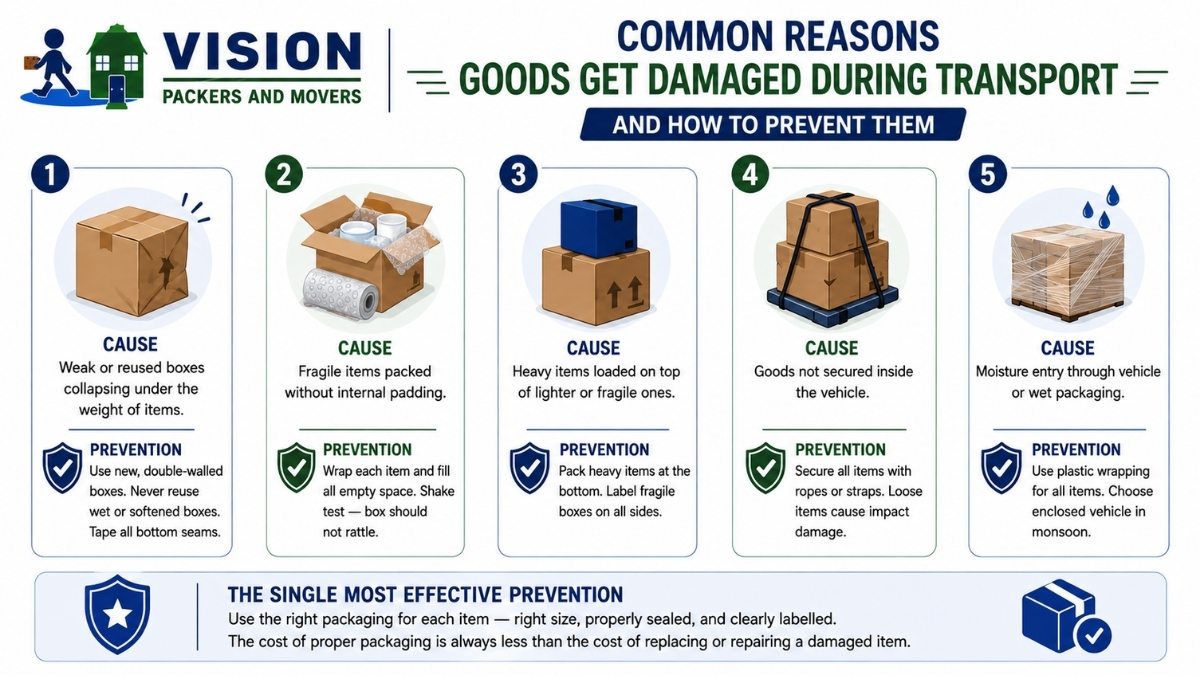
Most goods that arrive damaged were not damaged because of poor driving or bad luck. The causes are almost always practical and preventable. Understanding the most common reasons for damage helps you pack and prepare in a way that removes most of the risk.
Cause: Weak or reused cardboard boxes collapsing under the weight of items placed on top of them.
Prevention: Use new, double-walled cardboard boxes rated for the weight of your goods. Never reuse boxes that have been wet or softened. Tape every seam on the bottom before packing.
Cause: Fragile items packed without internal padding, so they move and knock against each other inside the box during transit.
Prevention: Wrap every fragile item individually in bubble wrap or paper before placing it in the box. Fill all empty space inside the box with crumpled paper or foam so items cannot shift. The box should not rattle when you shake it gently.
Cause: Heavy items loaded on top of lighter or fragile ones in the vehicle, crushing the items beneath.
Prevention: Pack heavy items at the bottom and lighter items on top. Label fragile boxes clearly on all sides so the loading team can position them correctly. Confirm with the team that fragile boxes will not be placed at the bottom of a stack.
Cause: Goods not secured inside the vehicle, so they slide and fall during braking or cornering.
Prevention: All items should be secured with rope, straps, or bungee cords against the interior walls of the vehicle. Loose items in an unsecured load are the most common cause of impact damage during transit.
Cause: Moisture entering through the vehicle or through wet packaging during monsoon or rain, causing water damage to wood, fabric, and electronics.
Prevention: Use plastic sheeting or stretch wrap over every item before loading. For electronic goods, add a sealed plastic layer inside the outer packaging. Request an enclosed vehicle during monsoon season.
The Single Most Effective Prevention
Across all these causes, the single most effective prevention is using the right packaging for each type of item. A box that is the right size, properly sealed, and correctly labelled eliminates most of the risk. The cost of proper packaging is always less than the cost of replacing or repairing a damaged item.
