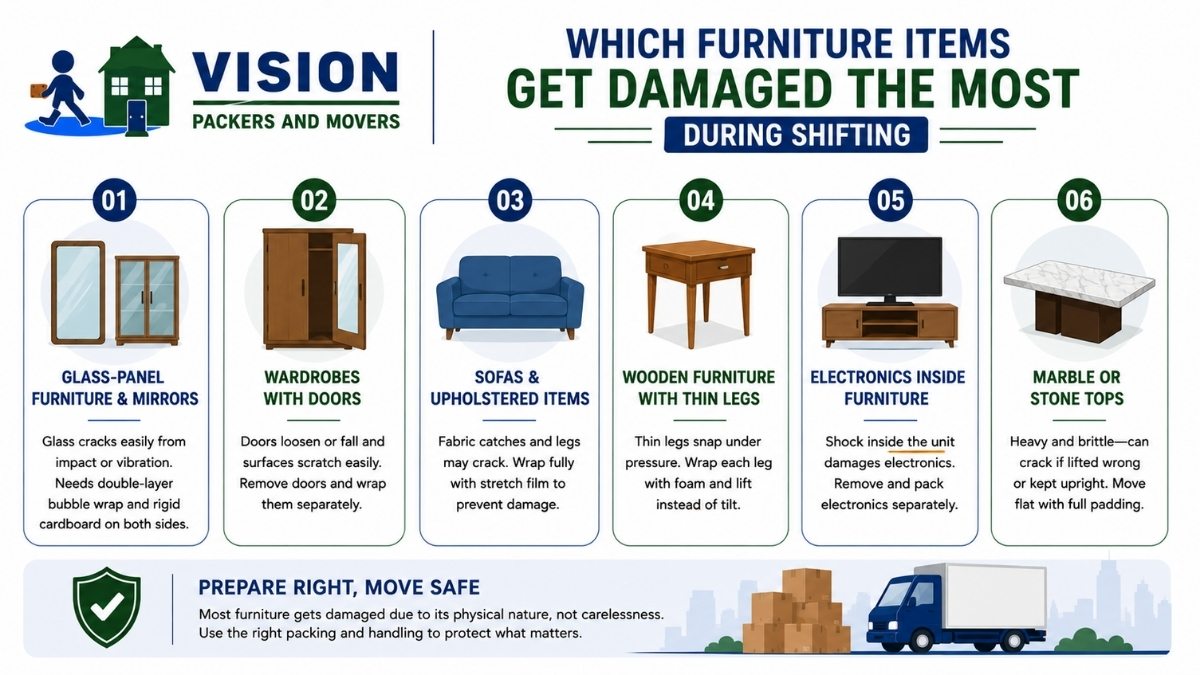
Some furniture items arrive at a new home in perfect condition. Others are more likely to show scratches, cracks, or structural damage after a shift. Moving professionals commonly note that certain types of furniture are damaged far more often than others, and the reasons are consistent.
Glass-Panel Furniture and Mirrors
Glass is the most reported casualty in furniture shifting. Wardrobes with glass doors, glass dining tables, and decorative mirrors are at high risk because glass cannot flex during impact or sudden movement. Even well-padded glass can crack if the wrapping is not firm enough to prevent vibration during the journey.
The prevention is wrapping each glass surface in at least two layers of bubble wrap and taping a rigid sheet of cardboard on both sides before the outer layer goes on. For very large mirrors or glass panels, additional corner protectors reduce the risk at the most vulnerable points.
Wardrobes and Almirahs With Doors
Large wardrobes are among the most difficult pieces to move without damage. The doors are the most vulnerable part — hinges loosen during transit and doors swing open or fall if not secured. The surface finish, particularly on painted or lacquered wardrobes, scratches easily against walls and other furniture during loading and unloading.
Doors should always be removed and wrapped separately before moving the main body of the wardrobe. This one step prevents the majority of damage this type of furniture experiences during a shift.
Sofas and Upholstered Furniture
Sofas are damaged less by impact and more by abrasion — fabric catching on a door frame, armrests scraping along a wall, or a leg cracking under the weight of other items placed on top. Upholstery stains are also common when sofas are loaded into vehicles without a protective cover.
Wrapping a sofa completely in stretch film before loading prevents most surface damage. The stretch film holds any protective blanket or covering in place and prevents fabric from catching on surfaces during loading and unloading.
Wooden Furniture With Thin Legs
Items such as side tables, study chairs, dressing tables, and display units with narrow legs are structurally vulnerable. Legs snap under side pressure, particularly when a piece is tilted during loading. Experience in the moving industry shows that thin legs on wooden furniture account for a significant share of structural damage during shifts.
The correct approach is to lift rather than tilt where possible and to wrap each leg individually with foam before any contact with floors, walls, or other items. For very thin legs, additional padding around the joint between the leg and the tabletop provides extra protection at the most vulnerable point.
Electronics Placed Inside Furniture
Televisions placed inside an entertainment unit, or monitors left on a desk and packed as one unit, are commonly damaged because the furniture shifts during transit and the electronics absorb the impact. Movers commonly report that electronics left inside or on top of furniture suffer damage that would not have occurred if they had been packed separately.
Electronics should always be removed from furniture before the furniture is moved, packed separately with appropriate padding, and placed in positions where they cannot be crushed or struck by heavier items during loading or transit.
Marble and Stone Tops
Dining tables and side tables with marble or stone tops are heavy and brittle. The top can crack under its own weight if lifted from the wrong angle or placed on an uneven surface. It is well known among moving professionals that stone tops transported upright rather than flat carry a significantly higher risk of cracking.
Stone tops should be removed from the table base and transported flat, not upright. They should also be placed on a padded surface and never positioned at the bottom of a load where other items rest on them.
The items on this list are damaged most often not because moving is inherently careless, but because these specific types of furniture have physical properties that make them vulnerable. Knowing which items need extra preparation is the first step to making sure they arrive in the same condition they left.
