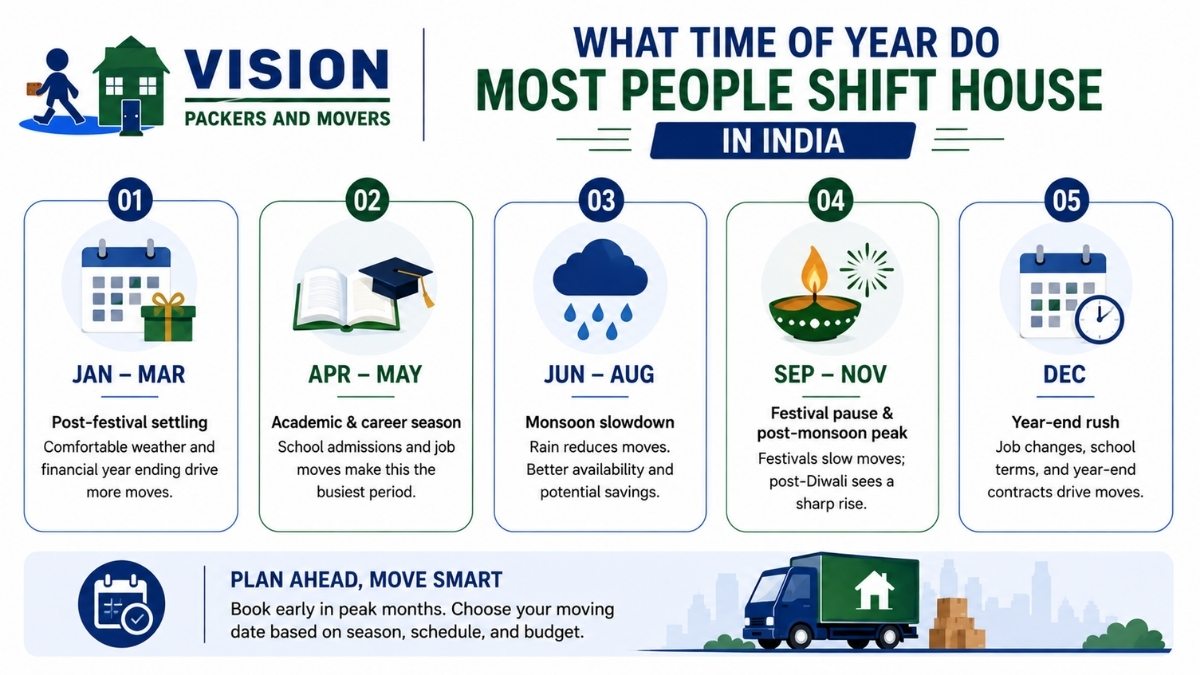
House shifting in India does not happen evenly throughout the year. Certain months see significantly higher demand for moving services, while others are noticeably quieter. Understanding these patterns helps you choose a moving date that is more affordable and easier to book.
January to March: Post-Festival Settling
After the major festival season ends in October and November, many families who delayed a move begin the process in January. The financial year also approaches its end in March, which prompts many corporate and government employees to complete relocations before the April reset. The weather in most of India is also at its most comfortable during these months, making it a popular period for shifting.
The combination of settled weather, the post-festival motivation to start fresh, and the financial year deadline creates a concentrated period of moving activity across the country in the first quarter of the year.
April to May: Academic and Career Season
This is one of the busiest periods for house shifting. School admissions for the new academic year begin, prompting families to move closer to a particular school. Graduation and first-job relocations also peak in April and May as college students and fresh graduates move to new cities to start careers. Demand for moving services rises sharply during this window and booking slots fill up faster than at other times of year.
Families planning to shift in April or May should book their moving company at least three to four weeks in advance. Waiting until the last week of March to book creates a real risk of not finding an available slot at a reasonable price.
June to August: Monsoon Slowdown
The monsoon season brings a natural slowdown in moving activity across most of India. Rain makes loading and unloading difficult, roads in some areas are affected, and the risk of moisture damage to goods is higher. Many people choose to delay planned moves until the weather clears. This is the quietest period for movers, which also means better availability and sometimes lower prices for those who do choose to move during this window.
For people with flexibility in their schedule, this period offers real advantages. Booking is easier, negotiation on price is more possible, and moving teams have more time to take care with each job.
September to November: Festival Pause and Post-Monsoon Peak
As the monsoon ends, moving activity picks up again in September. However, October and November bring major festivals — Navaratri, Durga Puja, Dussehra, and Diwali — and many households choose not to move during these periods for cultural reasons. The weeks immediately after Diwali often see a sharp increase in moves, as families who waited for the festival to pass begin their shift.
Planning a move in September or in the week or two after Diwali tends to work well. Both windows see increased availability before the next surge of demand arrives.
December: Year-End Moves
December sees another increase in activity as the calendar year closes. Corporate job changes, school term endings, and year-end contract completions all drive moves in this month. It is also a period when moving companies are busy and booking in advance is important.
Those who need to move in December should aim to confirm the booking in the last week of November. Leaving it until the second week of December is likely to result in limited availability on the most preferred dates.
What This Means for You
If you have flexibility on your moving date, April to May and January to March are the easiest periods to book but come with higher demand and prices. June to August offers quieter availability and potential savings but comes with weather challenges. The best personal moving date balances your schedule, the season, and how far ahead you can book.
Seasonal patterns in house shifting are driven by real, predictable life events — academic calendars, financial years, festivals, and weather. Planning your move with awareness of these patterns gives you more control over both the process and the cost.
