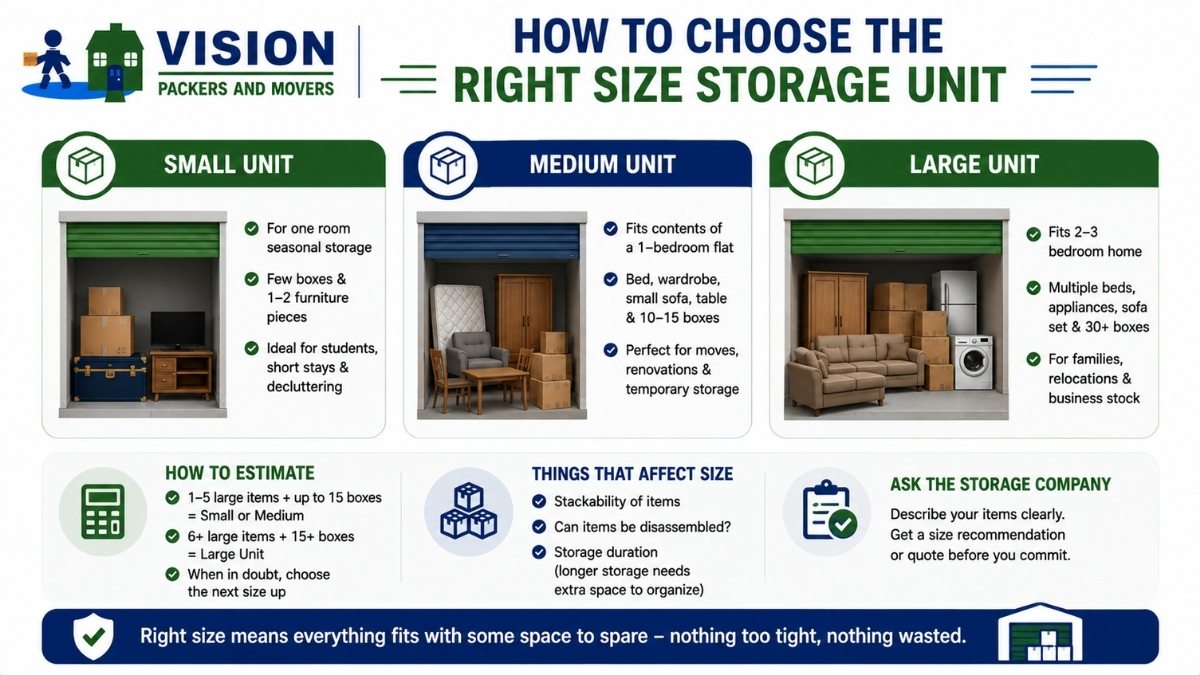
Picking the right size storage unit is easier than it sounds. The key is to match your actual belongings to a simple description rather than trying to calculate cubic metres. Here is a practical guide using everyday comparisons.
Small Storage Unit
A small unit holds roughly a few large boxes and a couple of pieces of furniture. It suits someone storing seasonal items from one room — winter clothes in a trunk, a few boxes of books and kitchen items, and perhaps a single piece of furniture like a side table or a television unit. Ideal for students in hostels, people between flats, or anyone doing a short declutter.
Medium Storage Unit
A medium unit holds roughly the contents of a one-bedroom flat. It comfortably fits a bed frame and mattress, a wardrobe, a small sofa or chair, a dining table with two chairs, and around ten to fifteen boxes. Suitable for someone vacating a one-bedroom home during a renovation, a person moving cities and storing items before finding a permanent place, or someone downsizing temporarily.
Large Storage Unit
A large unit can hold the contents of a two or three-bedroom home. It fits multiple beds, several wardrobes, a full sofa set, large appliances such as a washing machine and refrigerator, and thirty or more boxes. Used by families between two properties, people relocating internationally and storing their full household, or businesses storing large volumes of stock or furniture.
How to Estimate What Size You Need
Walk through the items you plan to store and count the large furniture pieces separately from the boxes.
- One to five large furniture pieces plus up to fifteen boxes — small or medium unit
- Six or more large furniture pieces plus more than fifteen boxes — large unit
- When in doubt, choose the next size up; unused space in a slightly larger unit is far less costly than trying to fit too much into a smaller one
Things That Affect the Size You Need
- How well items can be stacked (stackable boxes need less floor space than large furniture laid flat)
- Whether items can be disassembled (a disassembled bed frame takes far less space than an assembled one)
- How long items will be stored (for longer periods, organising within the unit becomes more important and requires a clear walkway, which needs extra space)
Ask the Storage Company to Help You Choose
Most household storage companies will ask you about the type and volume of items before recommending a unit size. Giving them an accurate description is more useful than guessing a size yourself. If possible, have the company do an assessment or provide a quote based on your described items before you commit.
The right size unit is the one that holds everything you need to store with a little space left to move around. Starting with a clear picture of what you are storing makes the choice straightforward.
