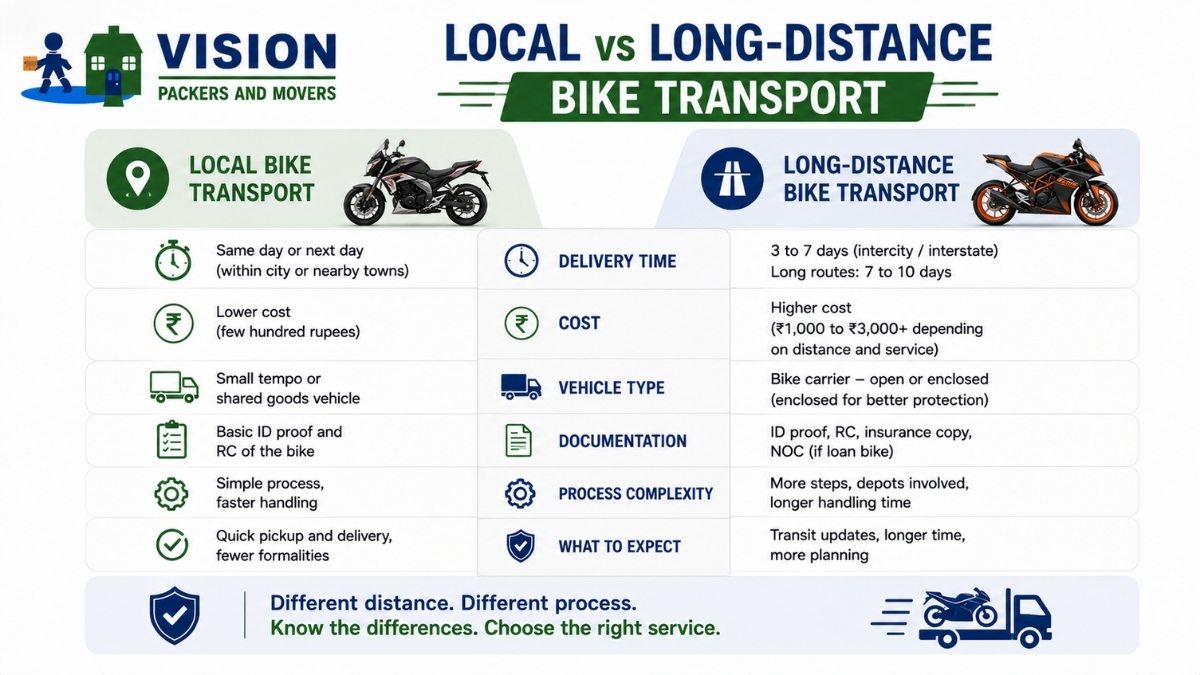
Bike transport covers a wide range of distances, from a short move across the city to a transfer between states thousands of kilometres apart. The process, cost, and timeline are quite different for each. Understanding these differences helps you book the right service and set the right expectations.
What Is Local Bike Transport?
Local bike transport covers moves within the same city or to a nearby town, typically within a distance of 50 to 150 kilometres. The bike is usually transported in a small shared vehicle or tempo and delivered within one day. The process is simpler because the bike does not cross state borders and does not require as much documentation.
What Is Long-Distance Bike Transport?
Long-distance bike transport covers intercity and interstate moves, typically above 200 kilometres. The bike travels in a shared carrier with other bikes or goods over several days. It may pass through a central depot before reaching the destination city. Documentation such as an identity copy and vehicle details is required at the time of booking.
Delivery Time
Local transport is usually completed within the same day or the next day. Long-distance transport takes three to seven days depending on the route. Very long routes, such as from the far south to the far north of India, can take seven to ten days. Always ask for a specific estimated delivery date rather than a range.
Cost Comparison
Local bike transport is significantly cheaper than long-distance. A local move within the city may cost a few hundred rupees. A long-distance move between distant states typically costs one thousand to three thousand rupees or more depending on the bike type, carrier type, and whether door-to-door service is included. Always ask for a written quote that breaks down each charge.
Type of Vehicle Used
For local transport, a small tempo or shared goods vehicle is common. For long-distance transport, a dedicated bike carrier — either open or enclosed — is used. Open carriers are more common and cheaper. Enclosed carriers provide more protection and are recommended for expensive or modified bikes on long routes.
Documentation Required
Local transport typically requires only basic identification and the registration certificate of the bike. Long-distance interstate transport may also require an insurance copy and a no-objection certificate from the bank if the bike is under a loan. Confirm the exact requirements with the company before booking.
Local and long-distance bike transport are different services that share the same name. Knowing which type you need — and what to expect from each — removes most of the uncertainty before you book.
