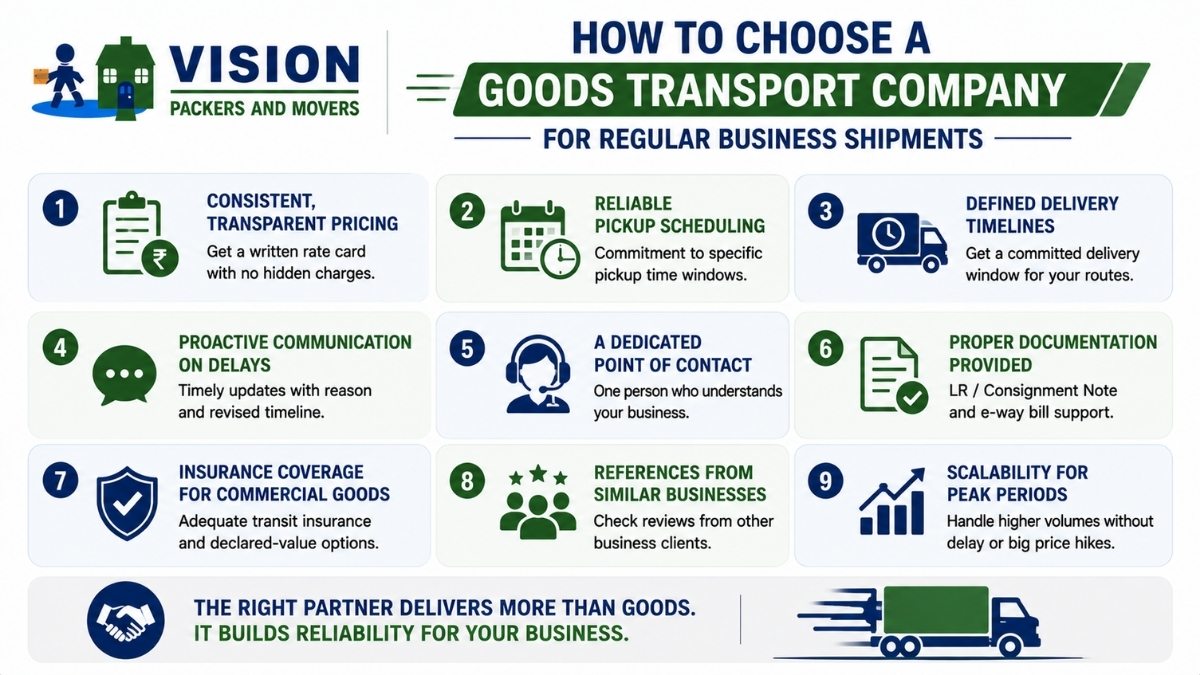
Choosing a goods transport company for a one-time move is different from choosing a partner for regular business shipments. For recurring shipments, consistency, reliability, and communication matter more than the lowest single-trip price. This checklist helps a small business owner compare transport providers on the factors that matter for a long-term relationship.
The Business Goods Transport Checklist
- Consistent, Transparent Pricing: Ask for a rate card that applies to your regular shipment profile — weight, volume, and common routes. A partner who changes prices without notice makes budgeting impossible. Get the agreed rates in writing.
- Reliable Pickup Scheduling: The company should be able to commit to a specific pickup window, not a vague "morning" or "sometime today". Missed or late pickups disrupt business operations and can affect your delivery commitments to customers.
- Defined Delivery Timelines for Your Routes: Ask how long delivery takes on the specific routes you use most often. Get the answer as a committed window, not a rough estimate. A transport partner for regular shipments should be able to give you a reliable delivery day, not just a range.
- Proactive Communication on Delays: A good transport partner tells you about a delay before you have to ask. They contact you with a reason and a revised timeline rather than going silent. Test this by asking how they handle delays during your first conversation.
- A Dedicated Point of Contact: For business accounts, you should not have to explain your requirements to a different person every time you call. Ask whether the company assigns a specific account contact for regular business customers.
- Proper Documentation Provided: For every shipment, you need a lorry receipt or consignment note as proof of dispatch. For commercial goods above a certain value, e-way bill generation should be handled or supported by the company. Confirm this before signing any agreement.
- Insurance Coverage for Commercial Goods: Confirm whether the standard service includes transit insurance and what the coverage limit is. For high-value goods, ask about declared-value insurance. A transport partner who does not offer insurance for commercial goods is a significant risk.
- References from Similar Businesses: Ask the company for references from other small businesses that use them for regular shipments. A provider who works regularly with businesses similar to yours in size and goods type is more likely to understand your specific needs.
- Scalability for Peak Periods: If your business has seasonal peaks, check whether the company can handle higher shipment volumes during those periods without a significant increase in delivery time or price.
The right transport partner for a business is not necessarily the cheapest option. It is the one that delivers reliably, communicates clearly, and makes your logistics predictable. Spending time on this decision upfront saves a significant amount of time and cost later.
