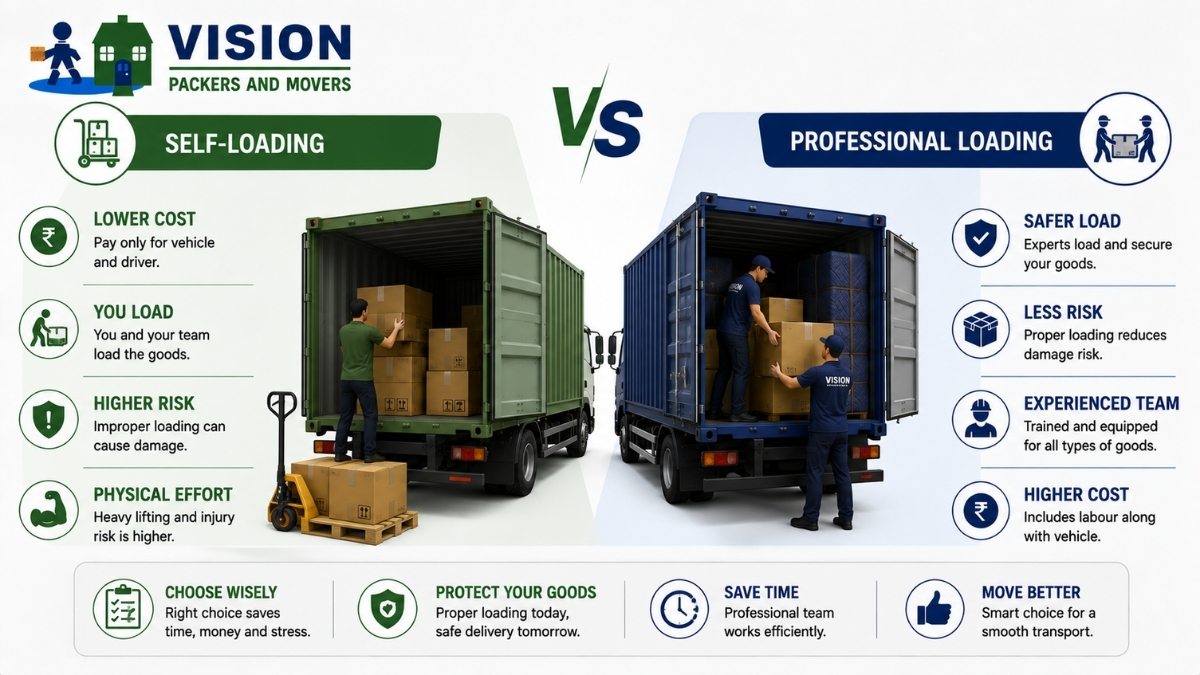
When booking goods transport, some companies offer the option to load the goods yourself before the vehicle arrives. Others provide a loading team as part of the service. Understanding the difference helps you choose the option that fits your situation, your budget, and the nature of the goods being sent.
What Is Self-Loading?
In a self-loading arrangement, the transport company delivers an empty vehicle to your address. You and your team are responsible for placing all goods into the vehicle, arranging them securely, and ensuring nothing shifts during transit. The driver waits during loading but does not assist with carrying or placement. This option is common for commercial shipments where the sender has a warehouse team already in place and ready to load efficiently.
What Is Professional Loading?
In a professionally loaded arrangement, the transport company sends a loading team along with the vehicle. This team carries goods from your location, places them in the vehicle in the correct order, and secures the entire load before departure. The team is trained to stack items efficiently and uses established methods to prevent damage from movement and vibration during the journey.
Cost Comparison
Self-loading is cheaper because you are paying only for the vehicle and the driver, not for labour. Professional loading adds a labour charge to the base vehicle cost. For large volumes of goods or heavy items, this additional cost is often worth paying. For small commercial shipments where you already have experienced staff available for loading, self-loading is a reasonable cost-saving option if the goods are straightforward to handle and secure.
Risk of Damage
Improper loading is one of the leading causes of goods damage during road transport. Goods that are not stacked and secured correctly can shift, fall, or crush lighter items during the journey — particularly on longer routes or roads with significant bends and uneven surfaces. A professional loading team follows proven practices for arranging and securing the load. Self-loading by people who are not familiar with transport loading significantly increases the risk of goods arriving at the destination with damage.
Physical Demand and Safety
Loading a goods vehicle is physically demanding work, particularly for heavy, bulky, or irregularly shaped items. Injuries from incorrect lifting technique are a real risk during self-loading, especially when the goods include machinery, heavy furniture, or large appliances. Professional loaders are experienced, physically prepared for the work, and have access to the correct equipment for handling heavy goods safely without injury to the people involved.
When Self-Loading Makes Sense
- You have a trained warehouse team already available at the pickup address
- The goods are already palletised or otherwise prepared for loading
- You are an experienced commercial shipper who understands load security requirements
- The goods are light, uniform in size, and straightforward to stack safely in the vehicle
- Reducing cost is the priority and you accept the associated responsibility for any loading-related damage
When Professional Loading Is the Better Choice
- You are moving household goods or mixed items of varying sizes, weights, and levels of fragility
- You do not have a trained and physically capable team available for loading on the pickup day
- Any of the goods are fragile, high-value, or difficult to handle without specialist care
- You want the transport company to take responsibility for any damage that occurs during loading
- You are using goods transport for the first time and do not have prior experience with load security
Professional loading is not just a convenience — it is a form of protection for your goods. The cost of one damaged item almost always exceeds the cost of the professional loading team that could have prevented it.
