One of the most common questions before a furniture shift is how long it will take. The answer depends on a few clear factors. Understanding these factors lets you plan the day realistically and avoid being caught off-guard when the move runs longer than expected.
The Main Factors That Affect Time
Number of Rooms
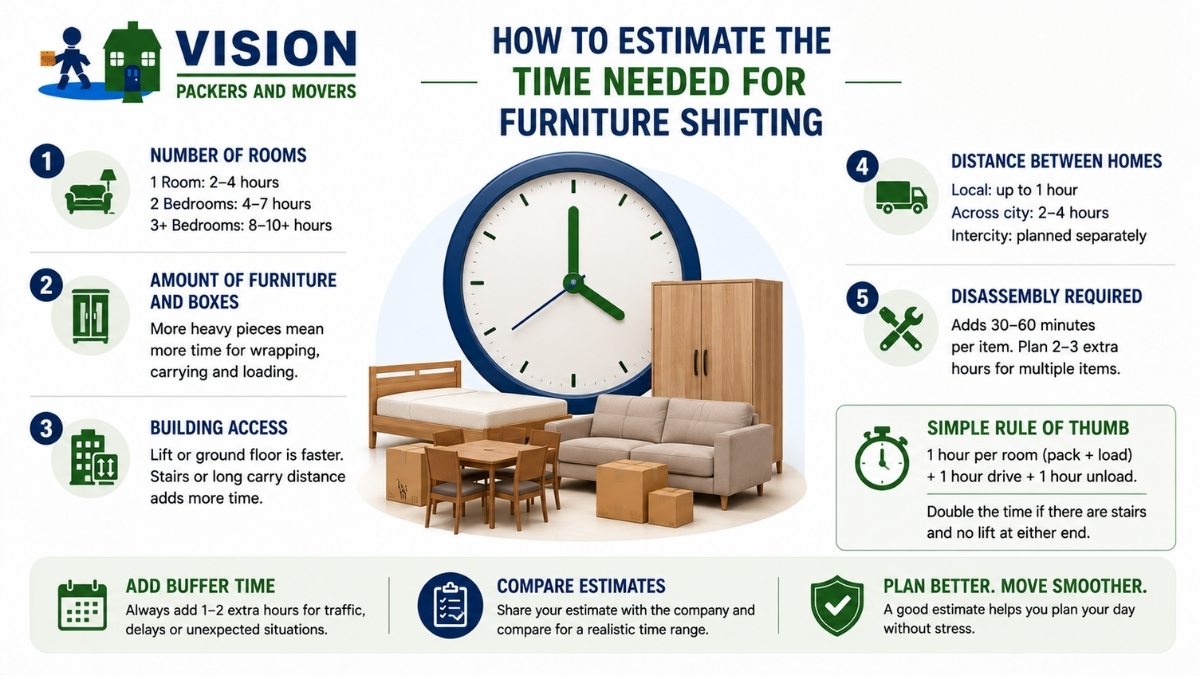
A one-room or studio shift takes between two and four hours for a professional team. A two-bedroom home typically takes four to seven hours. A three-bedroom or larger home can take a full day of eight to ten hours or more, depending on the volume of contents in each room and the number of large furniture pieces involved.
Amount of Furniture and Boxes
The count of heavy pieces — beds, wardrobes, sofas, and refrigerators — matters more than the total number of items being moved. Light boxes travel quickly. Each large piece of furniture adds significant time for wrapping, carrying through doors, and loading into the vehicle securely without causing damage.
Building Access
Homes with a working lift are faster to clear than those requiring staircase carries. A ground-floor flat is the fastest to work with. A fourth-floor flat without a lift adds an hour or more to the loading time, depending on the volume of goods. A long carry distance from the front door to the vehicle parking area also adds time to both loading and unloading at each end of the move.
Distance Between Homes
The driving time between the pickup address and the delivery address is added directly to the total time for the day. A local move within the same area adds one hour or less for the drive. A move across the city may add two to four hours. An intercity move is planned separately, as the vehicle will typically travel overnight and delivery happens the following day or later.
Whether Disassembly Is Required
Taking apart a bed frame, wardrobe, or dining table adds thirty to sixty minutes per piece. If you are moving three or four such items, allow for an additional two to three hours in the total estimate. Ask the company whether disassembly and reassembly are included in the booking or charged and scheduled separately.
A Simple Rule of Thumb
Allow one hour of packing and loading time per room, plus one hour for the drive, plus one hour for unloading and placement at the new home. Double this estimate if there are stairs at either end of the move and no working lift is available at either address.
Why You Should Always Add Buffer Time
Traffic delays, a sofa that does not fit easily around a landing corner, or a brief rain shower during loading can each add time to the day. A professional team works efficiently but cannot control every variable in the environment. Building an extra one to two hours of buffer into your planning means you are not under pressure if something takes slightly longer than the estimate suggested.
Share your own estimate with the moving company before the day and ask for their estimate based on your specific home and volume of goods. Comparing the two gives you a realistic range to plan around, and any large discrepancy between them is worth discussing before the move begins.
