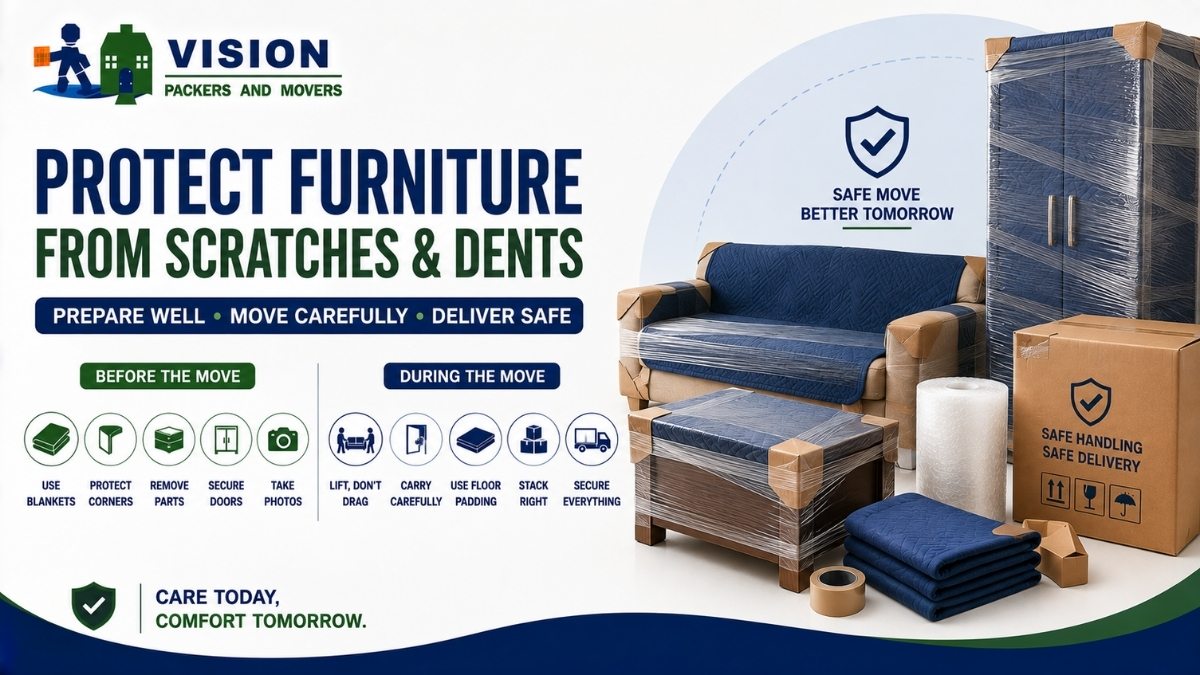
Furniture damage during a house shift is common, but the great majority of it is preventable. Most scratches and dents happen because of inadequate wrapping, poor handling technique, or furniture that was not properly prepared before the team arrived. Taking the right steps at both stages — before the move and during it — keeps your furniture in the same condition it was in when it left the old home.
Before the Move
- Use furniture blankets or moving pads on all large surfaces. Wrap sofas, cabinets, wardrobes, and dining tables in thick moving blankets and secure the blankets with packing tape or stretch film. The blanket absorbs impact and prevents surfaces from making direct contact with walls, door frames, or other furniture during loading and transit.
- Wrap sharp corners with corner protectors or folded cardboard. The corners and edges of furniture cause most of the wall and floor damage during a move — and receive most of the damage themselves. Foam corner protectors or folded corrugated cardboard taped over every sharp corner takes two minutes per piece and prevents a significant proportion of all scratch and dent incidents.
- Remove drawers, glass panels, and shelves before wrapping. A drawer that slides open mid-carry can strike a wall or injure a helper. A glass panel that is still fitted to a cabinet adds fragility and weight to an already heavy piece. Remove every component that detaches and wrap them separately. Tape all screws and fittings to the piece they belong to so nothing is lost.
- Secure cabinet doors with stretch film or packing tape. Cabinet doors that swing open unexpectedly are a consistent cause of damage during a house shift. Wrap stretch film around the entire piece two or three times to hold the doors closed, or run a strip of packing tape across each door. The doors will stay shut throughout loading and transit without any risk of swinging against a wall or another item in the vehicle.
- Photograph every piece of furniture before packing. Take clear photographs of each item from multiple angles before the wrapping goes on. These photographs create a timestamped record of the condition of the furniture before the move began and are essential evidence if any damage claim needs to be made with the moving company or the insurance provider after delivery.
During the Move
- Always lift furniture — never drag it. Dragging a piece of furniture across a floor scratches both the furniture base and the floor surface. Even a short drag of a few centimetres can leave a mark. Every piece must be lifted completely clear of the floor before it is moved. Use a furniture trolley for heavy items rather than attempting to slide them.
- Carry furniture horizontally through narrow doorways when needed. A sofa or wardrobe that is too wide to pass through a doorway upright can often be tilted and carried horizontally through the gap. Plan the carrying angle in advance, before the piece is already halfway through the frame and the team is making decisions under pressure with a heavy load in their arms.
- Place thick blankets on the floor or staircase landing where furniture is set down. Every time a wrapped piece of furniture is set down on a hard floor or staircase landing without any padding underneath, there is a risk of denting the base of the piece or scratching the floor surface. Keep a folded moving blanket on the ground at every point where furniture will be rested during the carry.
- Stack lighter items on top of heavier ones in the vehicle. Never place a heavy box or item on top of finished wood surfaces, glass panels, or wrapped soft furniture. Load the vehicle with the heaviest, most solid items at the base and build upward with progressively lighter items. Furniture with a polished or lacquered finish should not carry any load on top of it during transit.
- Secure all items in the vehicle with ropes or straps. Goods that are not tied down in a transport vehicle shift with every turn and braking movement during the journey. A large wardrobe that shifts sideways under braking can crush smaller items against the vehicle wall. Use ropes or moving straps to secure every large item before the vehicle departs, and check that nothing moves when you push it before the driver sets off.
Professional moving teams follow these same practices on every move as a matter of routine. Following them yourself when preparing furniture before the team arrives, and verifying that they are in use during loading and transit, reduces the chance of damage to a very small margin.
